A restaurant that books by phone kept losing calls
Chef Vola's doesn't take online reservations. Regulars call, and chef Lou decides. Calls got missed, the room's real capacity lived in his head, and nobody kept a record of guests. I built a phone line that takes requests and an iPhone app where Lou books every table himself.
The fix had to keep the personal touch. Lou still confirms every table. He just needed to stop losing callers and know at a glance whether a time could be seated.
From a phone call to a table
Callers press 1, say their name, and key in the party size, date, and time. The line checks the room while they're still on the phone and offers the nearest open times if it's full. The request lands on Lou's phone with a push alert and a verdict. When he books it, the guest gets a text, and big parties get a link to hold the table with a card.
-
01
The call
Press 1, say your name, key in the party, date, and time.
-
02
Checked live
The line checks real tables, and offers the nearest open times if it's full.
-
03
On Lou's phone
A push alert, and the request waiting with its verdict.
-
04
Held and booked
Big parties get a card-hold link. The guest gets a text.
Every request opens with a verdict
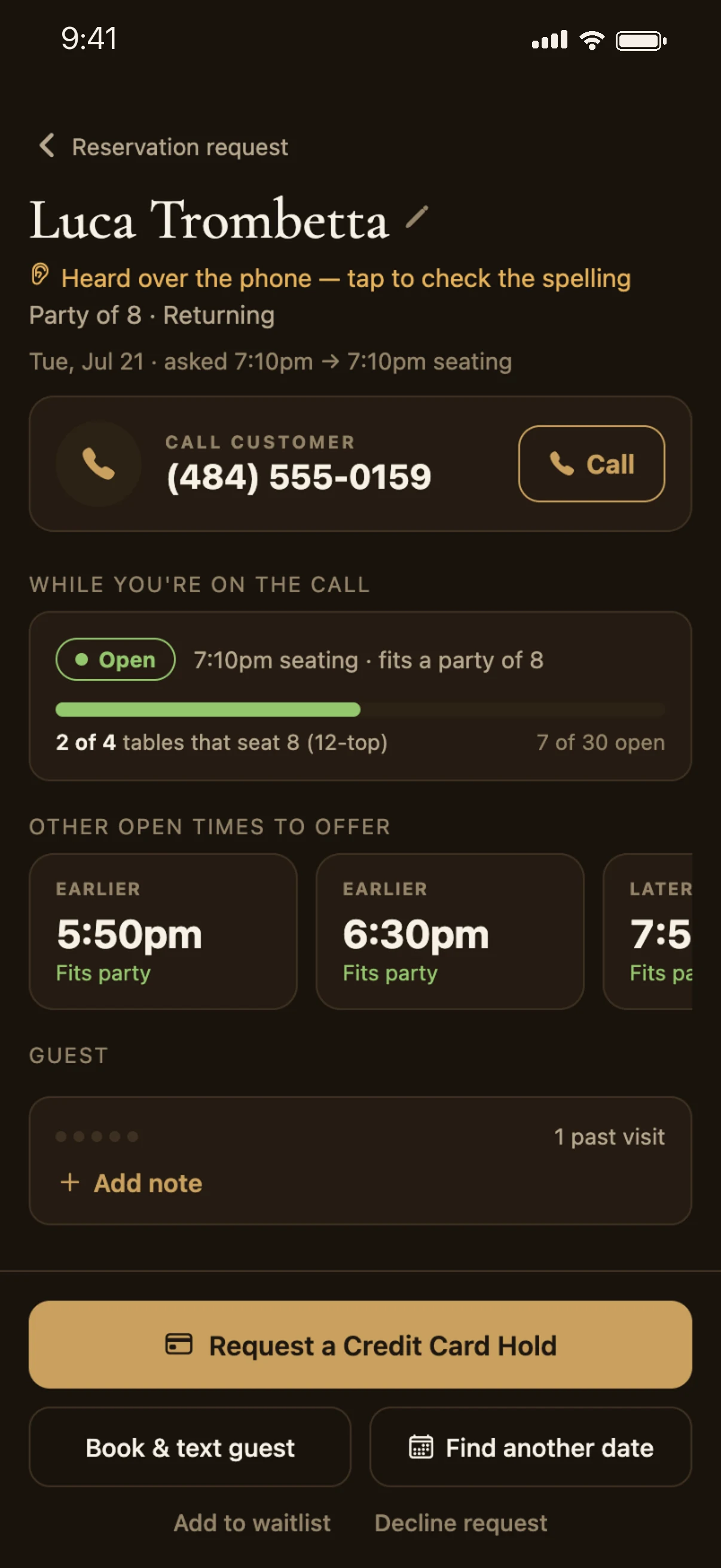
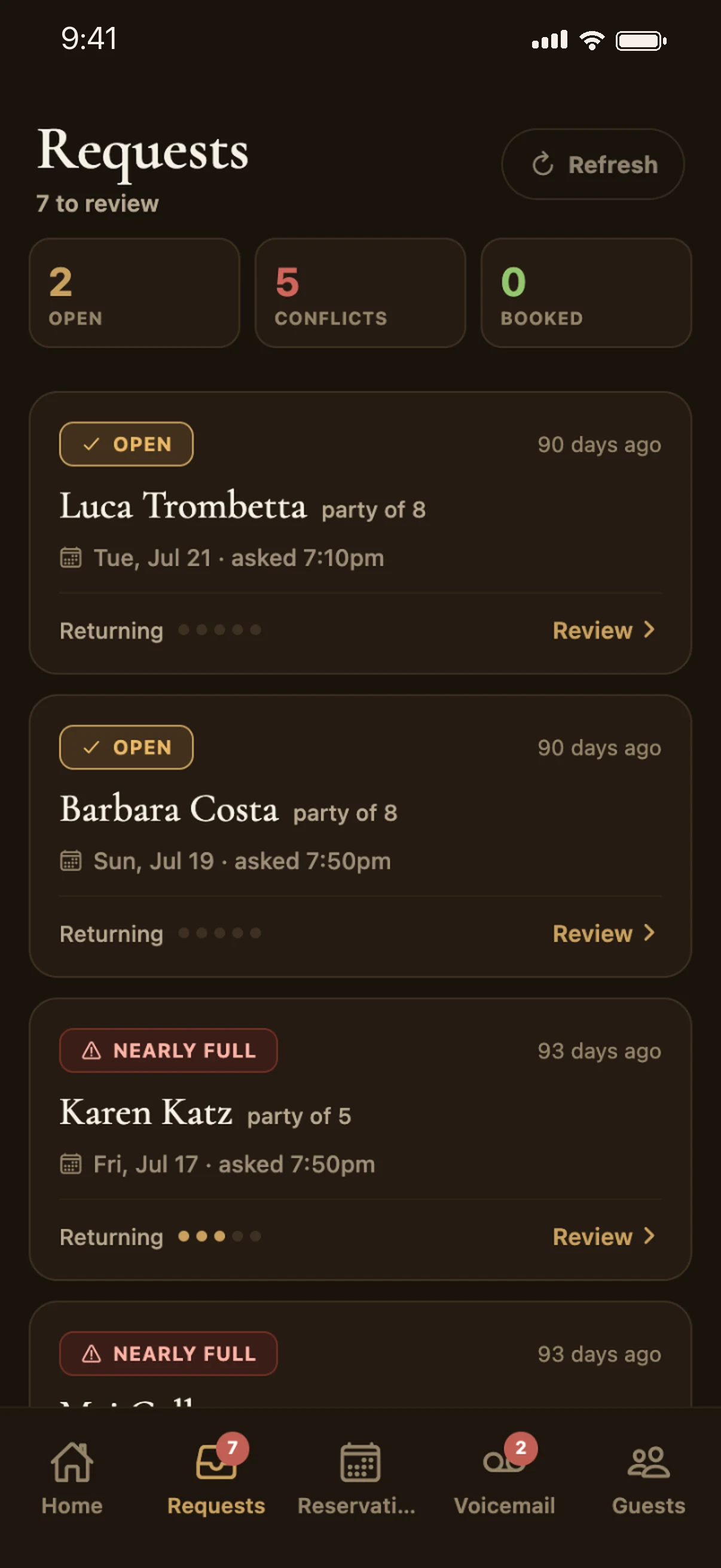
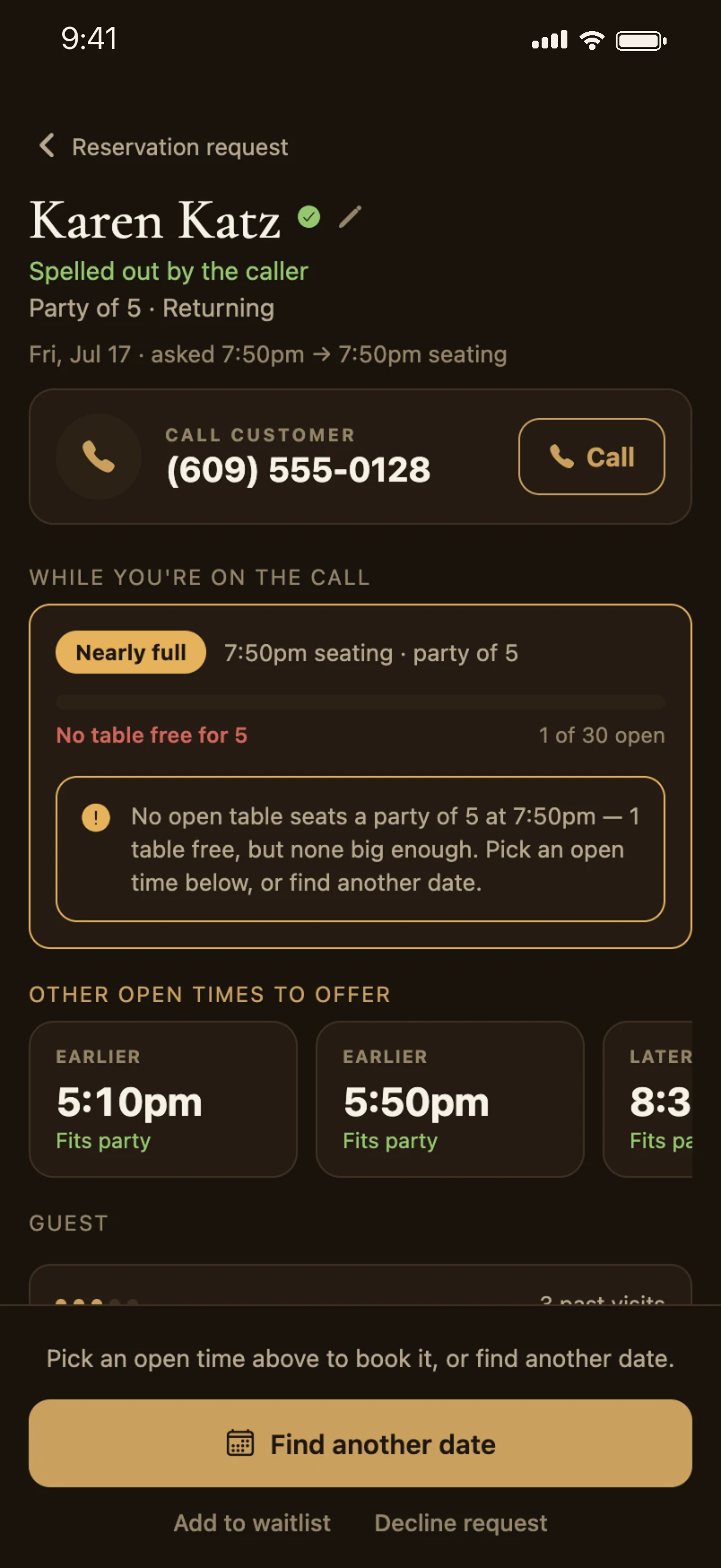
Requests are sorted into open, conflicts, and booked. Each one says whether the time works before Lou calls: open, nearly full, or full, with the tables that would seat the party and other times to offer. Big parties get a card-hold request instead of a plain booking, and a name the line only heard is flagged to check the spelling.
Tonight, and the room behind it
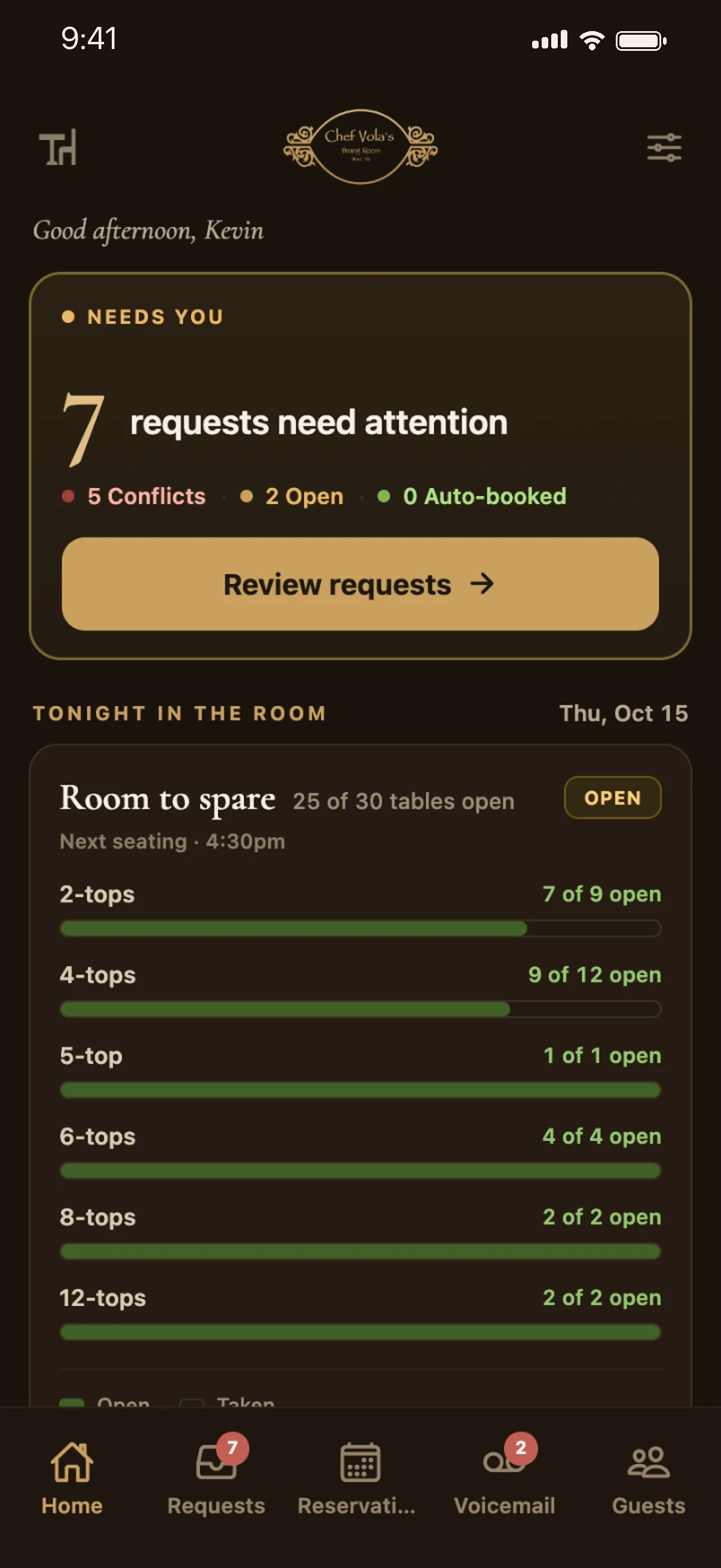
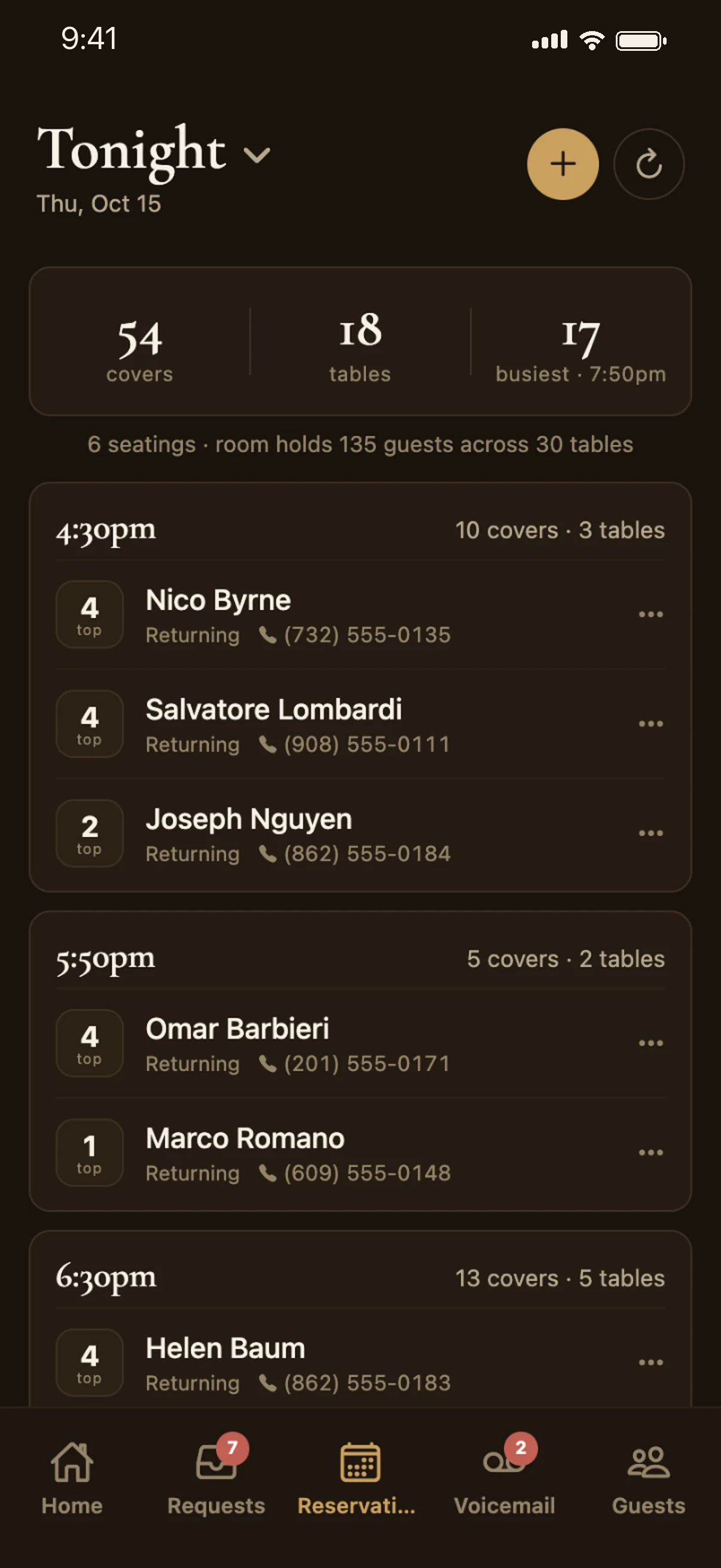
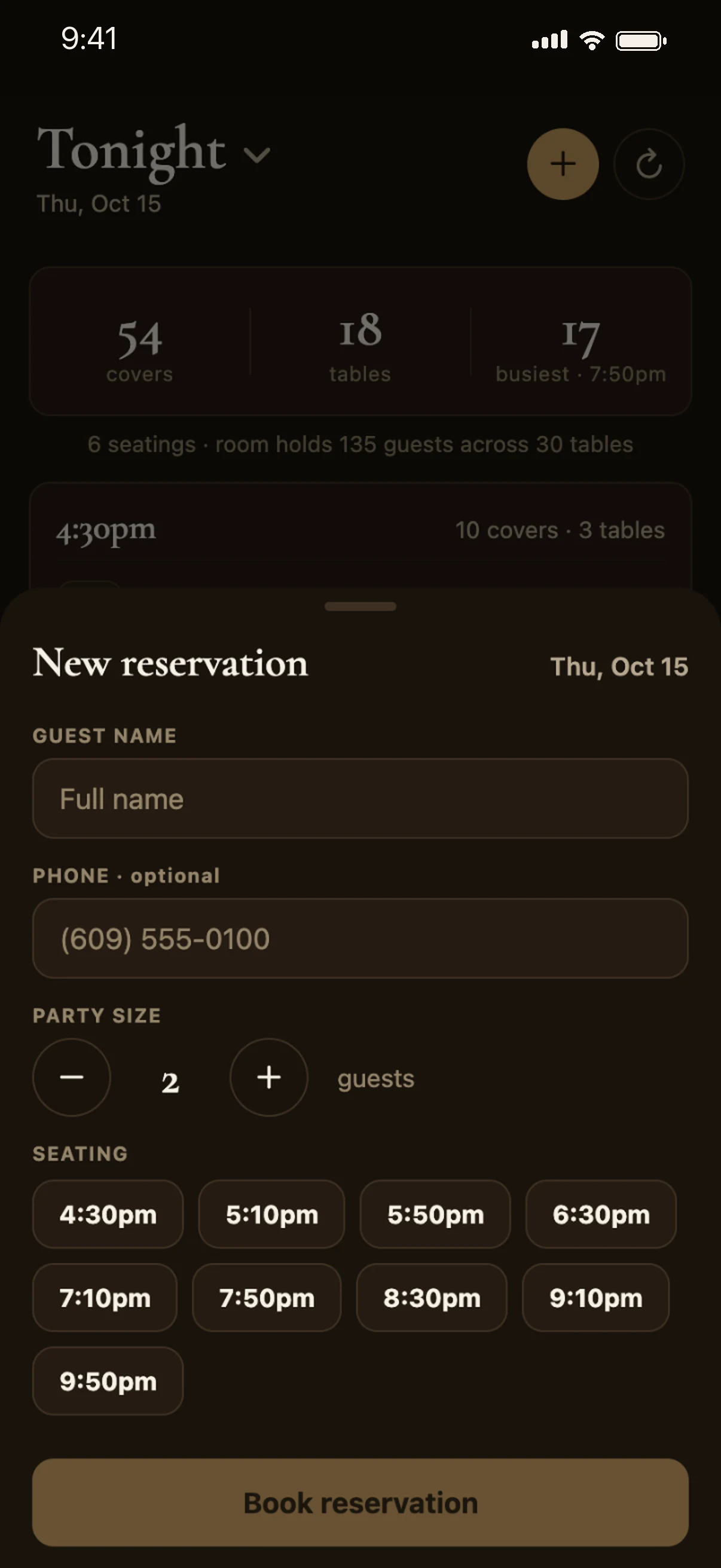
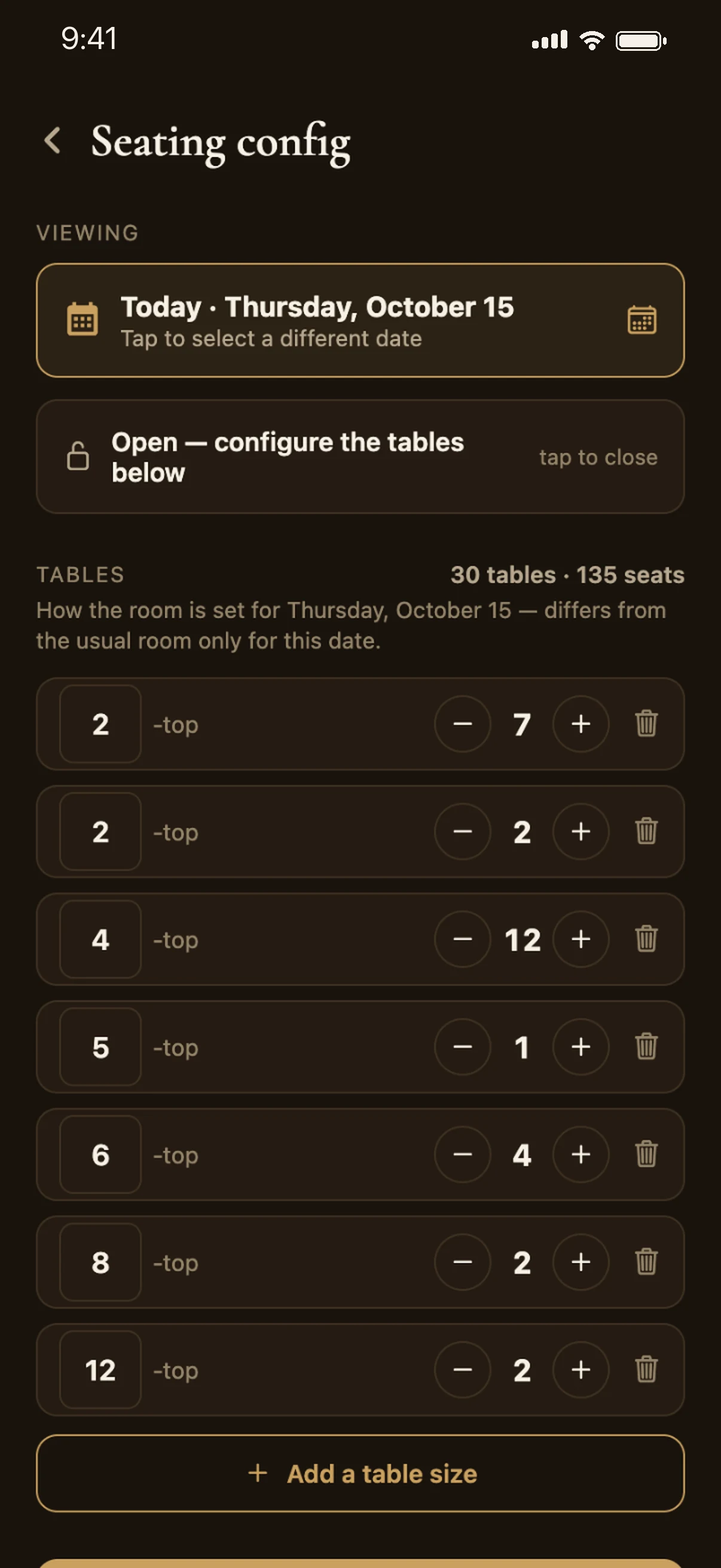
Tonight lists every seating with its covers and tables. Lou can add a walk-in or a call-in from the same screen, and the seating times on offer are the real ones. The room itself is set in the app: how many tables of each size, night by night, so availability always matches the floor.
Guests and voicemail
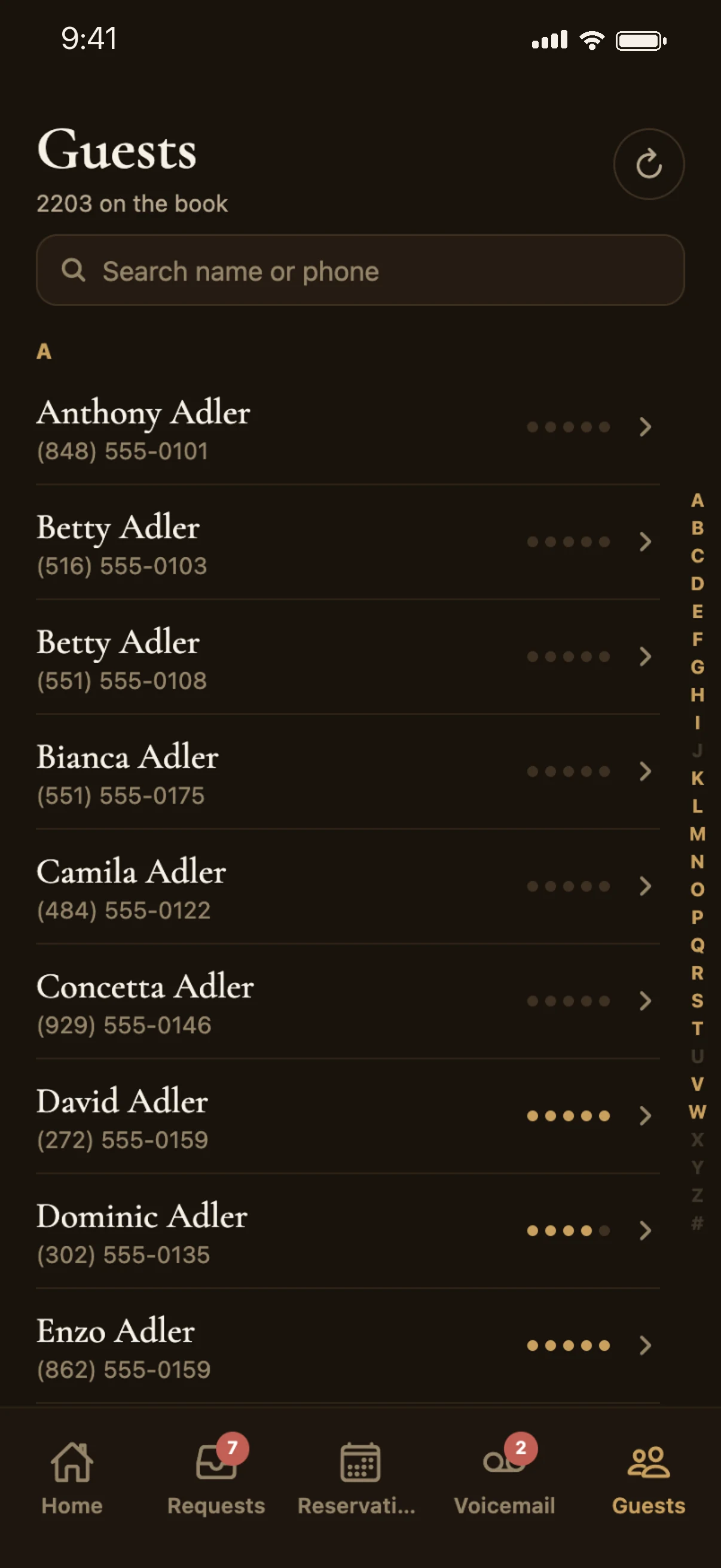
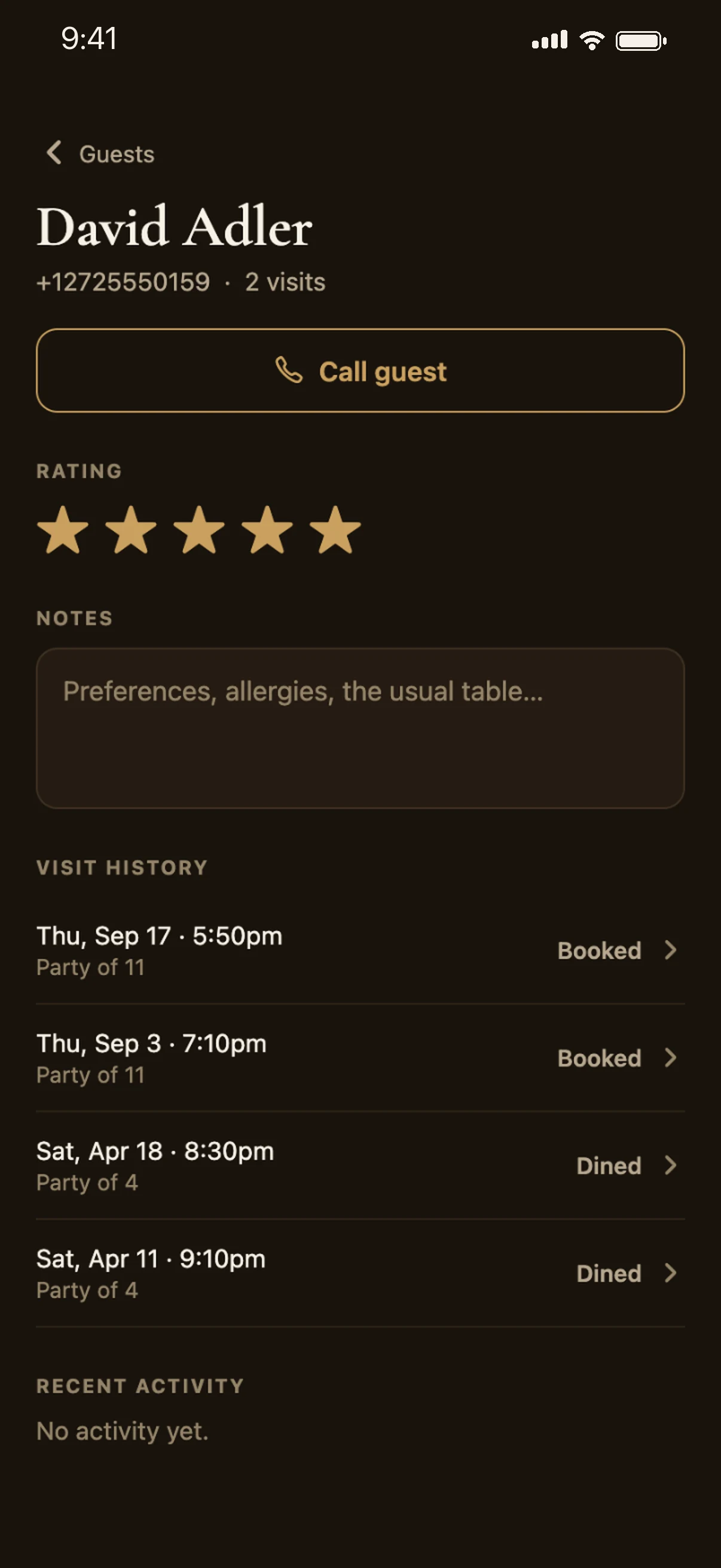
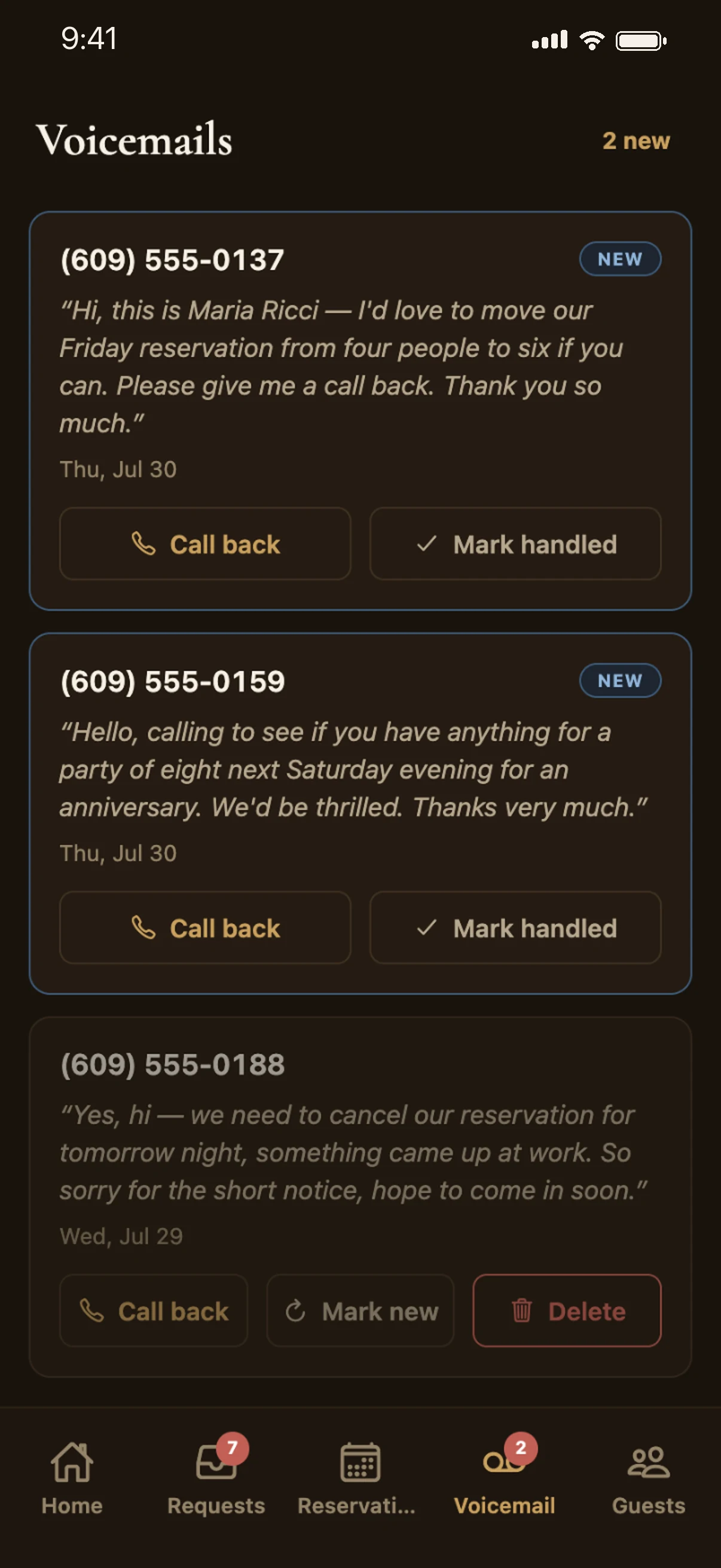
Each guest has a private rating, notes like allergies or a favorite table, and their visit history. Messages left on the line arrive transcribed, with Call back and Mark handled right on the card.
I modeled the business rules first: hours, slots, caps, and how a request becomes a booking. The app follows the rules.
Capacity is worked out in one place, and both the app and the phone use it.
The app shows why a time won't work, like no table free for a party of five, so Lou trusts it.
Big tap targets and type you can read at arm's length in a dark room.
Lou stopped losing callers and kept the personal touch.